There’s little question WrestleMania is the most important annual event to WWE history. It’s their annual showcase that has become a regular stadium filler. That’s before more modest years when ‘Mania still marked the culmination of major storylines, coronation of new franchise-level stars, and a stage to elevate the company’s business time and again.
The original WrestleMania was a game changer. While narratives vary about just how essential this event was to WWE’s financial prospects, it undeniably marked a major milestone in WWE’s establishment as the number one brand in professional wrestling. Hulk Hogan got a showcase moment as the top star in the business alongside an unequivocally successful celebrity outing as Mr. T tagged up with him. Other big matches like Andre the Giant’s triumph over Big John Studd and other celebrity appearances from the likes of names ranging from Cyndi Lauper to Muhammad Ali made some real magic.
WrestleMania 2 has a very different legacy, however. While WrestleMania 3 would become an iconic stadium event and WrestleManias 4 and 5 would bookend a tremendous year-long story, the second edition was defined by WWE taking some huge swings and striking out at the plate.
WrestleMania 2 Emanated From Three Arenas
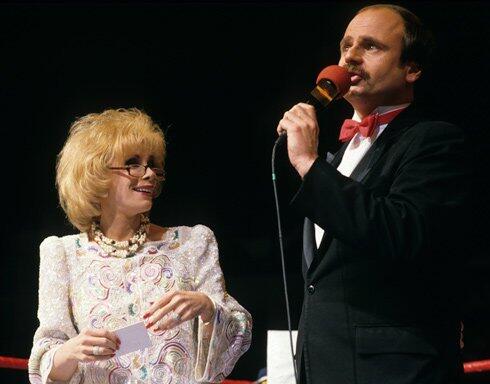
A year before WWE aimed to (and succeeded at) drawing a legitimate stadium crowd, the company set its sights on filling three separate arenas in New York, Illinois, and California. It was an ambitious concept and allowed WWE to, with reasonable credibility, claim a combined attendance of over 40,000.
The idea was imperfect. It made some logical sense to have three shows, each with one hour of live wrestling in the arena, two hours aired on big screens. The live viewing experience suffered, though, for having such a short snippet of live action and suboptimal conditions to watch the show on screens.
It also made some sense for WWE to be able to tout a triple main event for each venue getting its own high-profile closer. However, it’s hard to argue a worked boxing match that ended in a DQ (more on that to follow) or a battle royal were as legitimate main events as a world championship steel cage match featuring the top star in the business.
It’s unlikely WWE will ever return to a multi-city WrestleMania again, even though the two-night format launched in 2020 solves some of the problems this proposition poses. It’s technologically impressive WWE pulled it off at all in 1986, but the company seemed to learn its lesson that this idea just didn’t work.
Mr. T Vs. Roddy Piper Was A Disaster
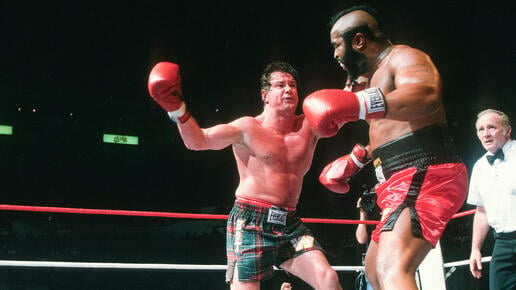
On paper, Mr. T vs. Roddy Piper made some sense as a WrestleMania main event. That’s given the degree of T’s celebrity star power, Piper’s status as arguably the top heel in the business, and the success of the main event tag team match the two were a part of at the original ‘Mania. In practice, though, this match had no business happening, let alone at a WrestleMania, let alone in closing the east coast portion of the event.
While three professional wrestlers working around Mr. T when he had to tag in and tag out of the match worked at WrestleMania 1, a year later, he was exposed in singles action. By all accounts, Hot Rod wasn’t eager to collaborate or make the actor look good either. The boxing match stipulation sort of covered T’s limitations in the ring, but also confronted WWE with time-tested truth: worked boxing matches are not good.
The result was an utterly lackluster affair. It may not have been the worst WrestleMania match of all time (thanks Jerry Lawler vs. Michael Cole!) but it has to be considered the worst match WWE attached a WrestleMania main event label to and in the bottom ten matches at the show all time—the worst match on quite arguably the worst WrestleMania card ever.
The NFL Vs. WWE Battle Royal Should Have Been A Bigger Deal
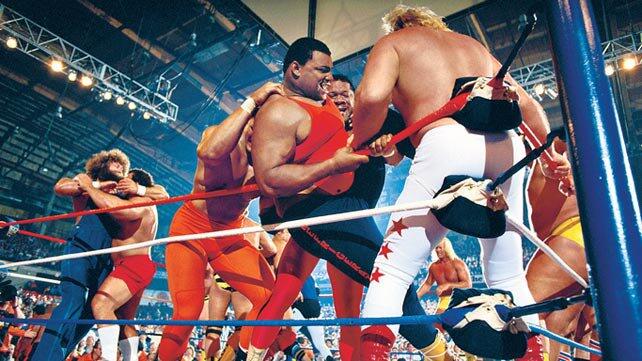
Like the idea of hosting a single event from three venues was ambitious, the idea of integrating NFL personalities into a star-studded battle royal was a big idea. Though the experiment wasn’t a complete failure, it also wasn’t exactly iconic.
In the mid-1990s, WCW featured NFL players Kevin Greene and Steve McMichael as main event level attractions. That’s not to mention WWE itself putting its complete faith in the drawing power and work ethic of Lawrence Taylor to headline WrestleMania XI (not to mention faith in Bam Bam Bigelow selling for him and Pat Patterson directing traffic as referee).
The takeaway: NFL players in a wrestling ring were a draw. They uniquely combined celebrity, big bodies, and real-world athletic credentials to immediately translate to a pro wrestling audience.
There are a number of reasons why the WrestleMania 2 battle royal featuring six NFL players or alumni didn’t work at a high level. The NFL wasn’t quite the juggernaut it would become as its popularity grew year over year to the point that this volume of stars from the league entering a WWE ring would become unthinkable. What was more under WWE’s control, though, was the booking.
Despite working around the limitations of non-wrestlers working a high-profile match, it still feels as though WWE should’ve been able to get more out of the football stars. Only William “The Refrigerator” Perry gave a memorable performance and even he didn’t make it to the final five. Andre the Giant military pressing Bret Hart out of the ring onto Jim Neidhart became the most memorable spot from the match, and that had nothing to do with NFL participation.
Hulk Hogan’s Match With Andre The Giant Erased The Legacy Of His Bout With King Kong Bundy
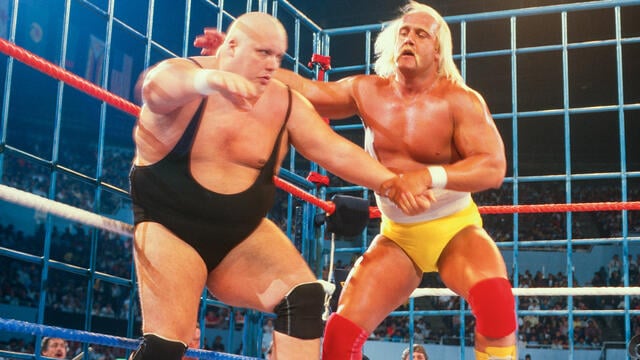
Hulk Hogan vs. King Kong Bundy has a case for being called the best match of WrestleMania 2, but that’s not saying a lot when the closest contenders were a good battle royal and good tag title match during the Midwest portion of the show. Hogan and Bundy at least had some heat, world title implications, and the spectacle of a cage.
That said, the biggest story of Hogan vs. Bundy was that of the superhero Hulkster vanquishing a super heavyweight heel. It was a formula that worked throughout the 1980s, but there’s little denying that this run-of-the-mill match on that formula was completely overshadowed by what happened one year later.
Andre the Giant turning heel made him the biggest, most famous, and most credible monster heel of his age. It was the premise of this ultimate behemoth clashing with Hogan that filled the Pontiac Silverdome. Though the match itself was no technical classic—arguably, in a vacuum, not even better than Hogan vs. Bundy—it has stood the test of time as perhaps the greatest attraction in pro wrestling history. In the process, that clash of the titans effectively erased what effect the Bundy match had had on wrestling history and culture, rendering it only memorable for the historical footnote of having headlined a WrestleMania.