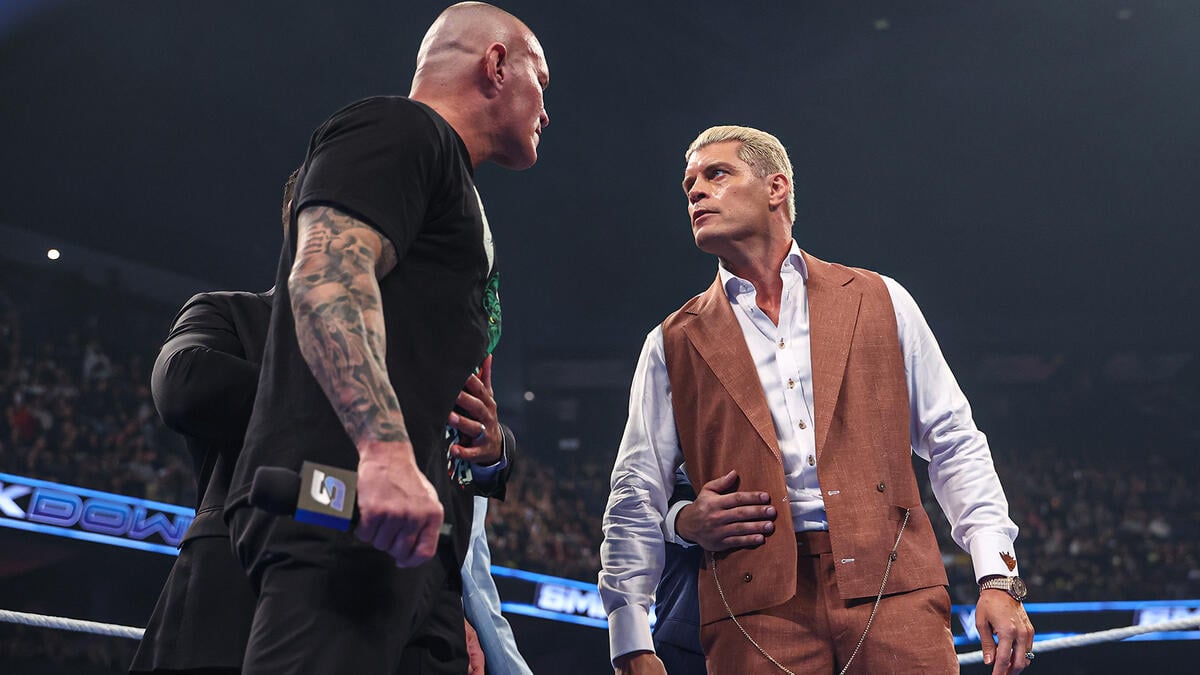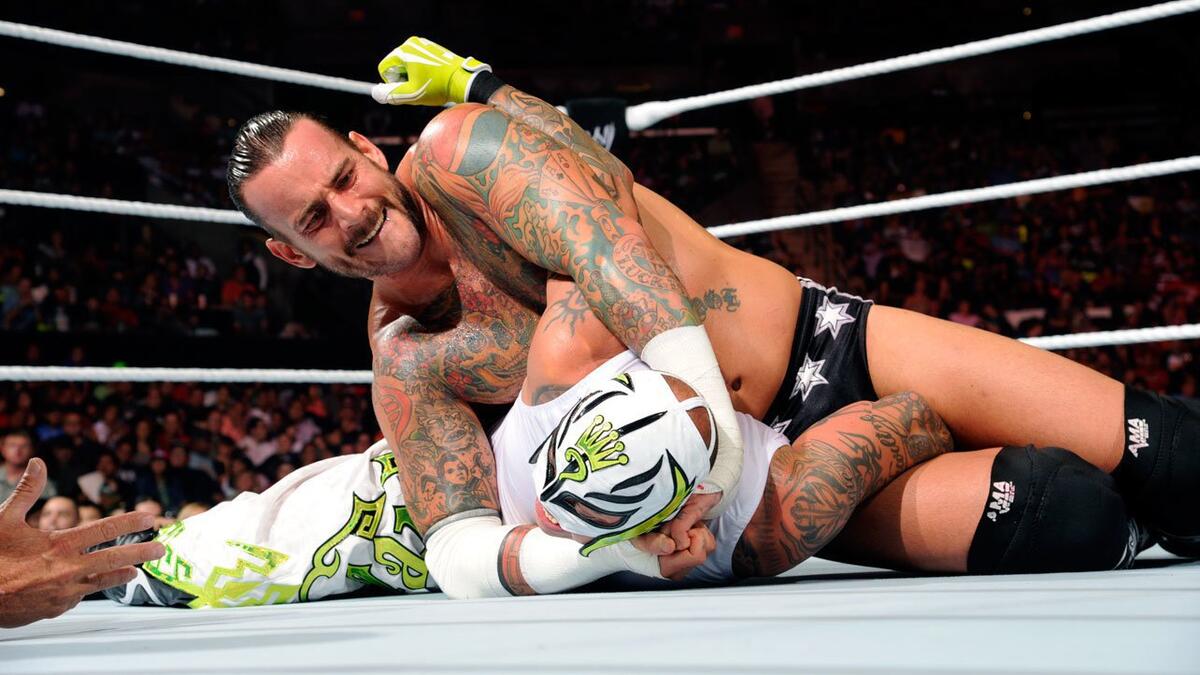

Speculation went into overdrive after Randy Orton turned heel on Cody Rhodes on SmackDown then, on the subsequent episode of Raw proved dismissive of Michael Cole’s interview attempt in favor of a phone call with an unknown conversation partner. One of the names social media theorized The Viper might have had on the line was The Rock.
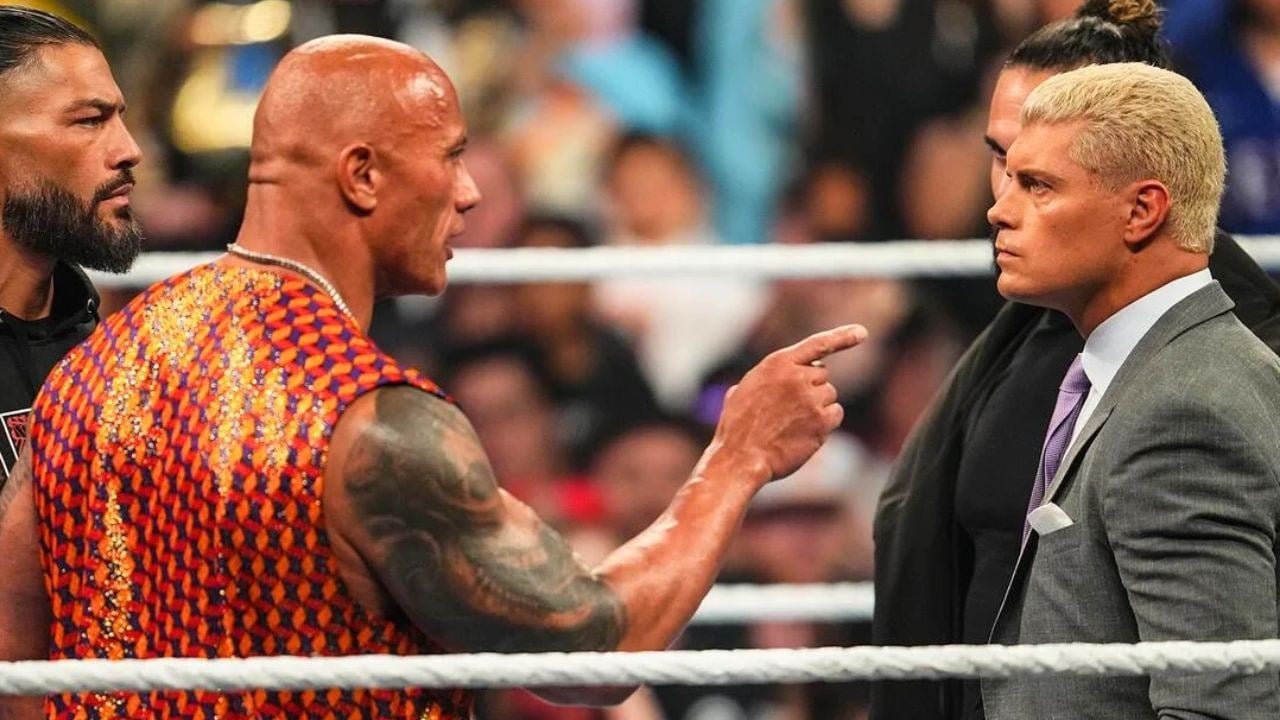
Besides each man having WrestleMania Saturday history now with Rhodes and each showing up on the shortlist for consideration among the greatest third-generation pro wrestlers of all time, Rock and Orton may come to share an inauspicious record effective next month.
The Rock made his WrestleMania main event debut at WrestleMania 15 and that impressively became the first of three consecutive years when he closed out the show at ‘Mania. Unfortunately, he lost in each of those outings—twice to Stone Cold Steve Austin and once as a first runner-up to Triple H successfully defending the WWE Championship in a Fatal Fourway that also involved Mick Foley and The Big Show.
The People’s Champion became the first man to lose three WrestleMania main events without a single victory, though he would get the job done a decade later at WrestleMania 28 (and win again to close WrestleMania 40, Night One). If Randy Orton doesn’t beat Cody Rhodes, he’ll join Rock as just the second man to lose his first three WrestleMania main events and will stand alone as the only man to work three or more WrestleMania main events and to have never won.
Randy Orton’s WrestleMania Main Event History

However else one may critique Randy Orton’s history as a WrestleMania main eventer, it’s a testament to his star power and longevity that, effective this year, he’ll have headlined the biggest show in the WWE calendar in shows spanning a seventeen-year period.
In 2009, Orton had already been an established main event guy for over five years when he closed out The Showcase of the Immortals for the first time, challenging Triple H for the World Heavyweight Championship. The two had a feud that offered a rare combination of a long history and white-hot momentum going into WrestleMania 25, though unfortunately most fans found the bout itself underwhelming, hamstrung by an ill-conceived stipulation that The Game would lose his title if he were disqualified.
Orton main evented again in 2014, when he walked into WrestleMania 30 to defend the WWE Championship against a returning Batista and surging Daniel Bryan. This match was an instant classic with a happy ending as Bryan celebrated with confetti raining from the rafters.
Now, Orton finds himself in another WrestleMania world title scenario—his fifth overall after working non-main event world title matches at WrestleManias 22, 24, and 33—and set to close Saturday night. He certainly has a chance at winning with the benefit of his momentum from a recent heel turn and no world title reigns since the ThunderDome era. On the flip side, though, Cody Rhodes only just won back his WWE Championship and is generally considered a nudge higher in star power than The Viper these days. As such, Orton’s chances of winning in his third ‘Mania main event have to be considered a toss up.
Main Eventing WrestleMania Itself Is More Important Than Wins And Losses

The Rock lost back-to-back-to-back WrestleMania main events from 1999 to 2001. Even those fans who believe in the theory that there can be multiple main events in the same night might claim that his wins over Hollywood Hogan or Stone Cold Steve Austin in 2002 or 2003 salvaged his record still couldn’t argue that The Great One won a WrestleMania main event before his fourth try.
Despite the setbacks, The Rock emerged as one of a very small handful of performers who could make any kind of credible claim to have been the biggest star in pro wrestling history—all of which set him up to walk right back into a WrestleMania main event spot when he returned to singles action for WrestleMania 28 nearly a decade past his in-ring prime.
Randy Orton may become the second man to lose three WrestleMania main event matches without a WrestleMania main event victory on his resume, and, at this stage of his career, it’s quite possible this will be the last time he ever closes out a ‘Mania. Still, just as The Rock demonstrated before him, it’s less wins and losses in this scenario than making it to “the big dance.”
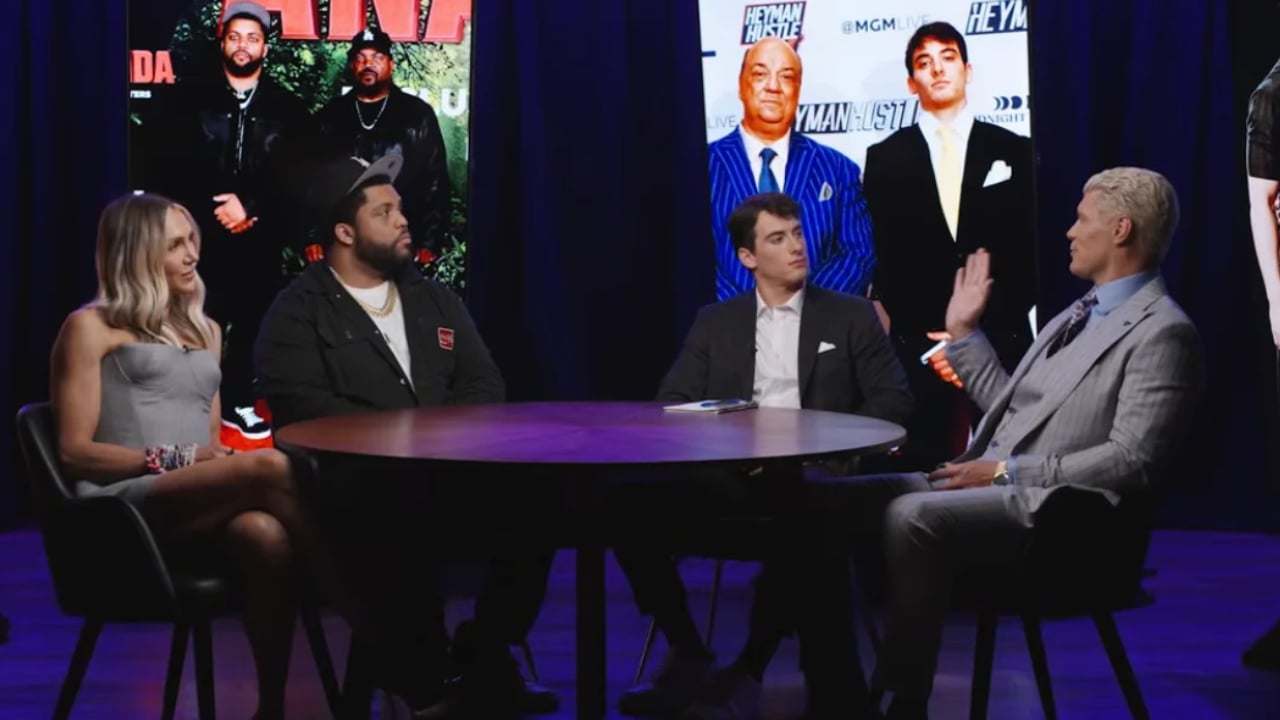
Cody Rhodes discussed on his podcast recently how small a proportion of wrestlers can claim to have truly drawn a house. These are the wrestlers who were not just among the attractions, on a show, but the kind of main eventers whom people put their money down to see.
It’s very telling about Orton’s star power, talent, and legacy that when ticket sales for WrestleMania 42 struggled, he’s the one who got transitioned into a world title picture, got the big heel turn push, and was entrusted to make business happen for WWE. Entering the rarefied air among just 13 men who’ve headlined WrestleMania three times or more only reaffirms that Orton is a fundamentally important wrestler to WWE history.
Randy Orton And The Rock Have Their Own WrestleMania History

Wrestling fans often talk about passing the torch moments and WWE has contrived more than its share, between Cody Rhodes’s victories over Roman Reigns and John Cena in recent years, or the way Mick Foley once put over a young Randy Orton as an ascending top guy.
A fun footnote in the Foley-Orton angle is that not only The Hardcore Legend but The Rock himself put over a rising Legend Killer. Twenty-two years back, at WrestleMania 20, The Rock teamed with Foley to face an Evolution trio of Orton, Batista, and Ric Flair.
The match was star-studded, especially in hindsight. Even more noteworthy, it served as both a swan song for The Brahma Bull who wouldn’t work another WrestleMania match for eight years, and an inflection point for Orton who, at the following SummerSlam, would be crowned the youngest world champion in WWE history.
Orton and Rock’s interactions were limited bell-to-bell, but it remains a fun historical footnote that they actually did have a WrestleMania match against each other.
WrestleMania main event spots are sacred. Only so many performers get that opportunity and fewer among them are those wrestlers who get a second, let alone a third chance. Cody Rhodes will work his fourth at WrestleMania 42 and welcome Randy Orton into that club. What follows for The Viper, only time will tell.